Beyond Straight Teeth: The Art and Science of Orthodontic Aesthetics
In the realm of modern dentistry, orthodontics has transcended its traditional reputation of "braces for crooked teeth" to emerge as a sophisticated blend of medical science and artistic expression. Today, orthodontic aesthetics—focused not only on aligning teeth but on harmonizing smiles with facial features, personality, and overall well-being—has become a cornerstone of patient-centered care. As global demand for "smile makeovers" surges, orthodontists are leveraging cutting-edge technology and nuanced design principles to craft results that are as functional as they are beautiful.

The Pillars of Orthodontic Aesthetics: More Than Meets the Eye
At its core, orthodontic aesthetics revolves around three interconnected pillars: dental harmony, facial balance, and patient individuality.
- Dental Harmony: This goes beyond straightening crowded or spaced teeth. Orthodontists now prioritize the "golden proportions" of dentition—ideal tooth width-to-length ratios, symmetric alignment of the incisal edges (front teeth edges), and balanced tooth angulation. For example, the "six anterior teeth" (the six front teeth) are designed to create a smooth, continuous curve when viewed from the front, ensuring natural symmetry.
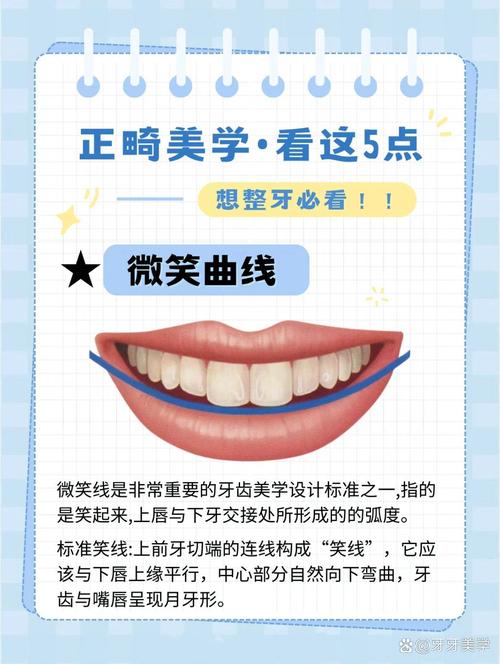
- Facial Balance: A beautiful smile complements, rather than overpowers, facial structure. Orthodontists analyze facial landmarks (e.g., the corner of the eye, the corner of the lip) to align teeth with the patient’s "smile line"—the curve formed by the tips of the front teeth when smiling. This ensures that teeth neither protrude nor recede excessively, maintaining harmony with lips, cheeks, and jawline.
- Patient Individuality: No two smiles are identical. A teenager seeking a "bold, vibrant" smile may opt for clear aligners with colorful accents, while an adult professional might prefer ceramic braces or lingual braces (hidden behind teeth) for discretion. Age, gender, cultural background, and personal preferences all shape treatment goals, making customization key.
Technology as a Catalyst: Precision Meets Personalization
Advancements in technology have revolutionized orthodontic aesthetics, enabling unprecedented precision and patient engagement.
- Digital Smile Design (DSD): This software allows orthodontists to simulate treatment outcomes before starting. By combining intraoral scans, facial photos, and 3D imaging, patients can preview their post-treatment smile—adjusting tooth shape, color, or alignment to align with their vision. "DSD empowers patients to co-create their ideal smile," says Dr. Elena Rodriguez, a leading orthodontist in Barcelona. "It transforms abstract goals into tangible results."
- 3D Printing and Custom Appliances: Traditional braces are being replaced by custom-fitted devices tailored to each patient’s anatomy. 3D-printed aligners (e.g., Invisalign) and lingual braces (e.g., Incognito) offer precise movement with minimal visibility, while robotic wire-bending (e.g., the SureSmile system) ensures optimal tooth positioning.
- Minimally Invasive Techniques: For adults with mild misalignment, "short-term orthodontics" (e.g., Invisalign Express) or clear aligners can achieve aesthetic results in 3–6 months—avoiding the need for extensive treatment. Even traditional braces now come in smaller, tooth-colored brackets that blend with natural teeth, reducing their "smile impact."
The Psychology of a Beautiful Smile
The benefits of orthodontic aesthetics extend far beyond aesthetics. Research consistently links a well-aligned smile to improved self-esteem, social confidence, and even career opportunities. A 2025 study published in the Journal of Orthodontics found that 87% of adults reported increased confidence after orthodontic treatment, with 65% noting better social interactions.
For adolescents, the impact is equally profound. "Braces are no longer just a medical necessity—they’re a rite of passage," notes Dr. James Kim, a pediatric orthodontist in Seoul. "But today’s options, like clear aligners or colorful bands, let teens express their personality while achieving the smile they’ve always wanted."
Challenges and the Future of Aesthetic Orthodontics
Despite progress, challenges remain. Balancing rapid results with long-term stability is critical—over-correction or aggressive movement can lead to relapse. Additionally, accessibility remains a barrier: advanced aesthetic treatments (e.g., lingual braces, DSD) are often costly, limiting access for low-income patients.
Looking ahead, artificial intelligence (AI) and bioengineered materials promise to push boundaries further. AI algorithms can predict treatment outcomes with greater accuracy, while "smart" braces with sensors may monitor tooth movement in real time. Biodegradable aligners, currently in development, could eliminate the need for retainers by gradually releasing tooth-straightening compounds.
Conclusion: Where Science Meets Art
Orthodontic aesthetics is a testament to the evolving role of dentistry: it is no longer just about fixing problems, but about enhancing lives. By merging medical precision with artistic vision, orthodontists are crafting smiles that are not only aligned but deeply personal. As Dr. Rodriguez puts it, "A great smile isn’t just about straight teeth—it’s about helping someone see their best self. That’s the true art of what we do."
In a world where first impressions matter, orthodontic aesthetics is redefining confidence—one smile at a time.